
„We have a problem“
Moroni, capital of the Comoros – Commissariat Central de Police:
“We have a problem.” It’s not the first time I’ve heard that today—this time, even in English. The official from the Ministry of the Interior speaks good English, but he keeps staring at me with a stern look. The next few minutes are spent in an interrogation. My counterpart can’t shake his suspicion. He’s looking for something. Something seems off to him. Or maybe he just senses the chance for a big story. After 15 minutes, he says goodbye. I stay at the police station, and I won’t be leaving anytime soon…
Daily life in the police station
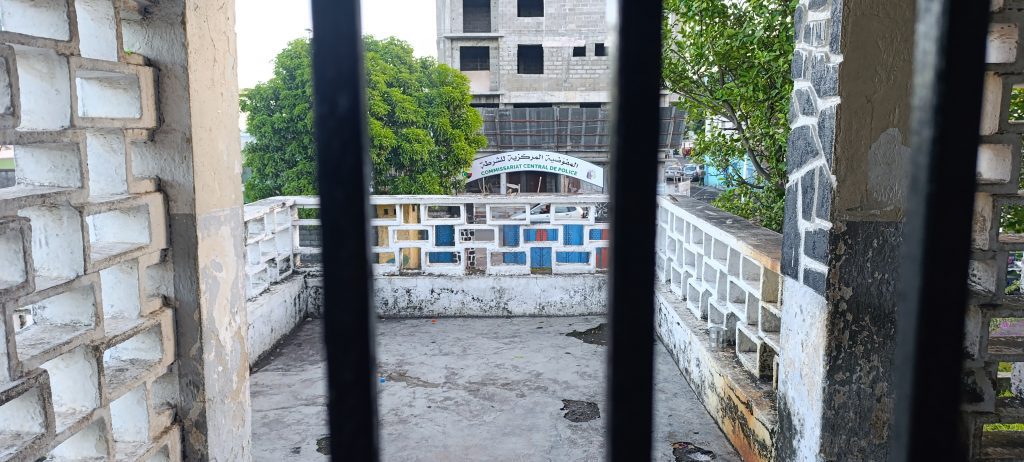
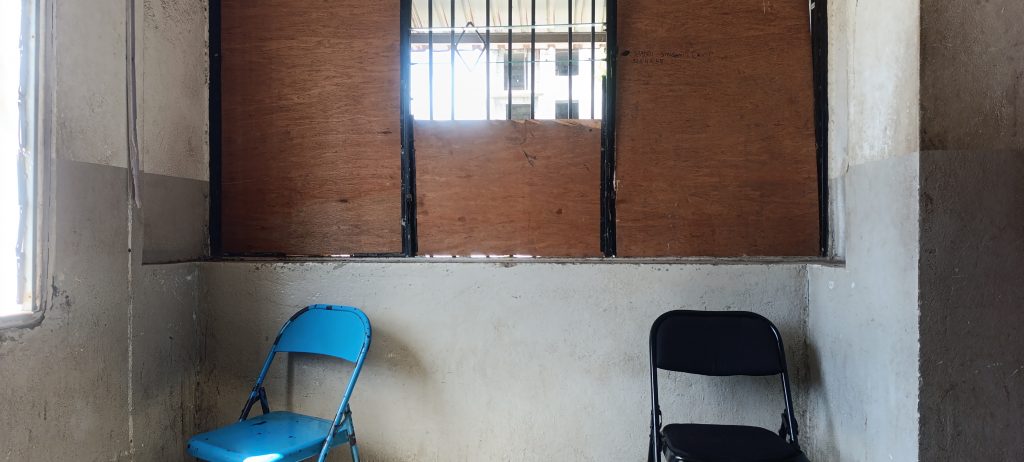
By the time the procedure is over, it’s already nighttime. The whole situation has left me shaken. I don’t fall asleep until late on the thin mattress that the officer on duty tossed into the small reception room. “You can sleep here,” is all he says before disappearing again. He’ll be sleeping in the office next door during his night shift. It’s not the worst accommodation I’ve had in the last years. At least the roof is watertight; the window isn’t—it’s missing. In a vacation brochure, they could even advertise my room as having a ocean view, since I can see the Indian Ocean over the low-rise houses. I can’t complain about security. Plus, it’s free—the Comoros can be expensive. I’ll be making good use of the terrace over the next few days—albeit without a lounge chair. I have no choice but to pace back and forth on the roughly four-square-meter area. Aside from my path to the bathroom, it’s the only open space I have left. Within these confines, I can move about freely at the police station. The days drag on slowly. My smartphone is locked away in a cabinet. These days are turning into a challenge of a different kind—think “digital detox.” Others pay a fortune for this in monasteries and health resorts. After a few days, I know the surroundings well: the large sign above the entrance, the railing around the terrace, and the windows hastily patched with plywood. The only change of pace comes on the weekend: since the police station has a subscription to French pay-TV, I can watch the Premier League along with the officers.
We are together
By now I’ve gotten used to the situation, and I’m sleeping much better since I go to bed without any distractions. A set daily routine is taking shape: getting up, waiting, and eating—together with the captain. The crew and his family are taking good care of us these days. It’s only later that I learn he isn’t here out of solidarity. He, too, is no longer allowed to leave the police station. I’m grateful to him. From the very beginning, he took responsibility for my lost passport and acted like a true captain. Now we’re just biding our time together.
Standstill
In my own case, things have more or less come to a standstill. I haven’t seen a single person from the Ministry of the Interior—the agency that ordered my arrest—the entire time. The German Embassy in Dar es Salaam is trying to help me. Neither they nor the French Embassy in Moroni have ever received an official response regarding the exact charges against me. The French Embassy at least tries to obtain a visitation permit—but there, too: radio silence. In Tanzania, too, no one in a position of authority can be reached—they haven’t paid the phone bill. And the chief commissioner at the “Commissariat Central” says, “That’s not my level. There’s nothing I can do about it.” And so twelve long days pass before things finally start to move. A lawyer has inquired about the case with the general prosecutor’s office. As it turns out, general prosecutor hasn’t heard a thing about my arrest. But first, I’m in to see the district prosecutor. He considers my case a clear-cut matter. Entering the country without a passport constitutes “illegal entry.” After another night—the fourteenth—the time for a decision has come. The prosecutor across from me is trying to wrap everything up as quickly as possible. I can already picture myself with one foot on the next flight back to Germany. But for that, I’m still missing an identification document—and the approval of the general prosecutor. And that’s where the whole story takes yet another absurd turn…
It can definitely be useful to have the contact information for your responsible embassy. The only EU embassy in Moroni is the French embassy.
Schreibe einen Kommentar